Book Review #3 – So Sad Today

Title: So Sad Today

Author: Melissa Broder http://www.melissabroder.com/

Synopsis: So Sad Today is a collection of personal essays written by Melissa Broder, detailing her life with anxiety, depression, panic disorder, an eating disorder, and addiction. In each essay (which are technically their own stories but strung together intentionally to paint a larger arc of her life), she discusses a specific topic or time period and how her mental illness played a role. The essays range from sexting, to barf, to being diagnosed with depression, to being addicted to the internet, to marriage, to chronic illness, and a whole lot more. The essays are extremely honest and all in the personal-narrative style. Although the essays are not in any chronological or specific order, you still feel like you get to know Broder more and more with each passing chapter. The book is based on Broder’s initially anonymous twitter handle @sosadtoday, and the essays are sort of like really long tweets: random, sometimes funny, specific, and awesome to read. 

Why I liked this book: This book made me super uncomfortable, but that is definitely part of why I liked it. Broder talks about mental illness unabashedly, and while reading the book I had a constant feeling of wow, someone else feels like that too? I think Broder’s writing is really brave, and that is the main reason I enjoyed this collection of essays. She never shies away from topics (i.e. a vomiting fetish?). She mixes in different writing styles to make the book even more interesting (one chapter is in the form of a google chat conversation with her higher self, and another is just her answers to an online quiz that determines whether or not you are addicted to the internet). Her writing is funny, honest, serious, sad, and poetic all at the same time. If you are someone who has friends or loved ones with mental illnesses, read this book. A lot of your peers with mental illnesses are probably wishing they could express even half the things that Broder does. If you are someone who has a mental illness, definitely read this book, because it feels like you meet a new friend by the end. And I think everyone in the world either has mental illness or knows someone who does, so yeah, everyone should read this book. 

Powerful passage: “It’s weird, you can be ‘so sad today’ and still be scared of judgement. Like, how much mental illness is ‘acceptable’ and how much is going to be ‘too much’? Someone DMs me, ‘We convince ourselves that we can own the identity of the anxious or depressed person. Then it sneaks up again.’ It’s like, I got this. Then the mental illness is like, No, I’ve got you” (page 132). 

Things to keep in mind: This book details an eating disorder, depression, anxiety, panic attacks, chronic illness, and addiction. 

Link: https://www.kizzysbooksandmore.com/book/9781455562725
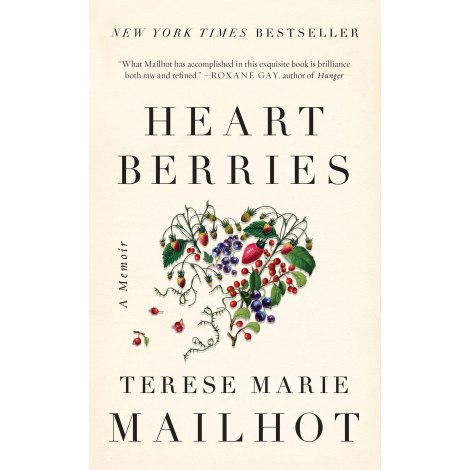
 

Book Review #2 – Heart Berries


35840657._UY2577_SS2577_

Title: Heart Berries (A Memoir)

Author: Terese Marie Mailhot. From the back of the book: “Mailhot is from Seabird Island Band. She graduated with an MFA from the Institute of American Indian Arts, where she now serves as faculty. She is a Tecumseh Postdoctoral Fellow at Purdue University.” 

Synopsis: Terese Marie Mailhot began her memoir Heart Berries after being hospitalized for suicidal ideation and being diagnosed with bipolar II disorder, PTSD, and an eating disorder (she admitted herself to a psychiatric institution). The entire memoir is a series of essays written to her now-husband Casey. Mailhot grew up on the Seabird Island Band in the Pacific Northwest, and in this memoir she reflects on the childhood trauma she endured (including abuse and neglect) as well as how being a First Nation Canadian impacted her relationship with mental illness as well as with her past. 

Why I liked this book: This is probably the most poetic book I have ever read. The writing is really rich and complex with a strong emphasis on sensory detail. I liked how honest Mailhot was about her feelings and her struggles with mental illness: you could understand and empathize with all that she endured and all of her strength, but you also could appreciate and understand the mistakes she’d made and the things she regretted. Mailhot’s story helps normalize mental illness in communities of color, specifically Indigenous communities, and demolishes the idea that mental illnesses can exist only biologically or act in isolation. The fact that the book is mostly a series of letters written to her white husband is also powerful and beautiful: by exposing the ways her husband labelled and misunderstood her, Mailhot also provides a reader like me with many opportunities to explore how I engage in similar behaviors. This is one of the most powerful and beautiful works I have ever read, DEFINITELY READ!!!!

Powerful passage: “In my first writing classes, my professor told me that the human condition was misery. I’m a river widened by misery, and the potency of my language is more than human. It’s an Indian condition to be proud of survival but reluctant to call it resilience. Resilience seems ascribed to a human conditioning in white people” (page 7). 

Things to keep in mind: This book details sexual abuse as well as hospitalization. 

Link: https://bookshop.org/books/heart-berries-a-memoir/9781640091603


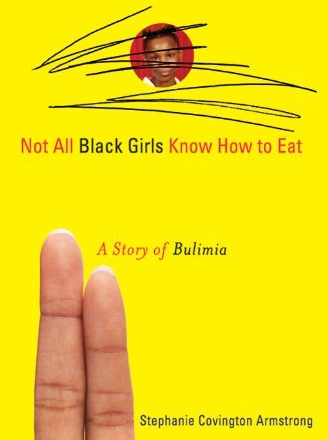
Book Review #1 – Not All Black Girls Know How to Eat

41l9lh3atkL

Title: Not All Black Girls Know How to Eat

Author: Stephanie Covington Armstrong https://stephaniecovingtonarmstrong.com/about/ (click here to learn more about her and visit her website!) 

Synopsis: In her memoir Not All Black Girls Know How to Eat, Stephanie Covington Armstrong discusses her bulimia, both its causes and impacts, over the expanse of her life. She explains how many conditions of her childhood, including poverty, sexual abuse, abandonment, and food insecurity all informed her mental illness and her experience with food and coping. Although eating disorders are typically (and inaccurately) considered a “white woman’s illness,” Armstrong’s experience powerfully combats that narrative and furthermore looks into how that stereotype impacted her experience with diagnosis, treatment, and recovery. 

Why I liked this book: First of all, memoirs are my favorite genre. Throughout the novel, Armstrong’s voice is casual and relatable, and she provides so much room for the reader to reflect on their own experiences through her story. She bravely opens up a space for many other black women to feel heard within the eating disorder narrative, and also a space for women like me (white or white-passing) to reflect on how much we benefit from a racist mental healthcare system. This book represents eating disorders as a social justice issue rather than just an illness, with various combining factors and circumstances (including racism). The way she relates eating to coping helped me see how that relationship plays out in my own life. Armstrong breaks down ED stereotypes and opens up an important conversation about how harmful said stereotypes can be. This book is deeply sad and moving, but it is also a celebration of strength and resilience!!

Powerful passage: “Twenty-plus years ago the terms eating disorder, bulimia, anorexia, binge eating and compulsive eater had not yet seeped into the popular lexicon, which made it easier to stay in denial. I preferred to think of it simply as ‘my little problem with food.’ Sure I had heard the words anorexic and bulimic, but to me that meant girls like Karen Carpenter” (page 164). 

Things to keep in mind: This book includes extremely detailed descriptions of binging and purging, as well as mentions of certain weight numbers, height numbers, and calories. This memoir may be triggering for individuals who do not feel they can read the details of an eating disorder. This book also details sexual assault and abuse.

Link: https://www.kizzysbooksandmore.com/book/9781556527869  (please try to buy this book from a black-owned bookstore rather than amazon!!)

Related article: https://www.nationaleatingdisorders.org/stories-of-hope/digesting-truth-stephanie-covington-armstrong


Book Review! – ABOUT

Hello everyone!

I wanted to announce something new I am going to try on my blog! 

Of course, this blog’s primary focus has been my own writing and my own experience: I wanted to share my experience with everyone in hopes of connecting with even one person over a shared understanding, or by giving even one person the words to articulate something they were feeling but never knew how to talk about. I am going to continue posting my work on this platform, and if you are reading this, thank you for all of your support!

However, I’ve decided to try something a little different than my usual posts! I am starting a new category on my blog called “book review;” essentially, I am going to spend more time reading other literature about experiences having to do with mental illness and identity, and then I will provide a little synopsis and explain why I liked the book! (This new material can be found in the same way you find my “journal” entries). I think this will be a great way to share more material with you all, that way you can learn more and also learn about experiences that are different from mine (obviously the review would be encouragement to read the book on your own, and not a substitute for reading the book on your own). Although I am going to call it “book review,” my plan is to include other types of media as well, whether that be articles, podcasts, or movies/TV. Although I am going to include a wide range of material, my main focus for this reading list is going to be from the perspective of individuals who suffer from mental illness and also have a (or multiple) marginalized identity. My first review is already up, and I hope everyone will take a look and then read the book! Please email me with any recommendations you have, and I will try to read them!

On another quick note, if you haven’t noticed already, I added a donation/take action page on my blog specifically amplifying mental health organizations that support the black and/or indigenous community. Please donate to any of these organizations if you can, and your help would be much appreciated! If you do not have the means to donate, check out some of the articles towards the bottom of that page to learn more.